
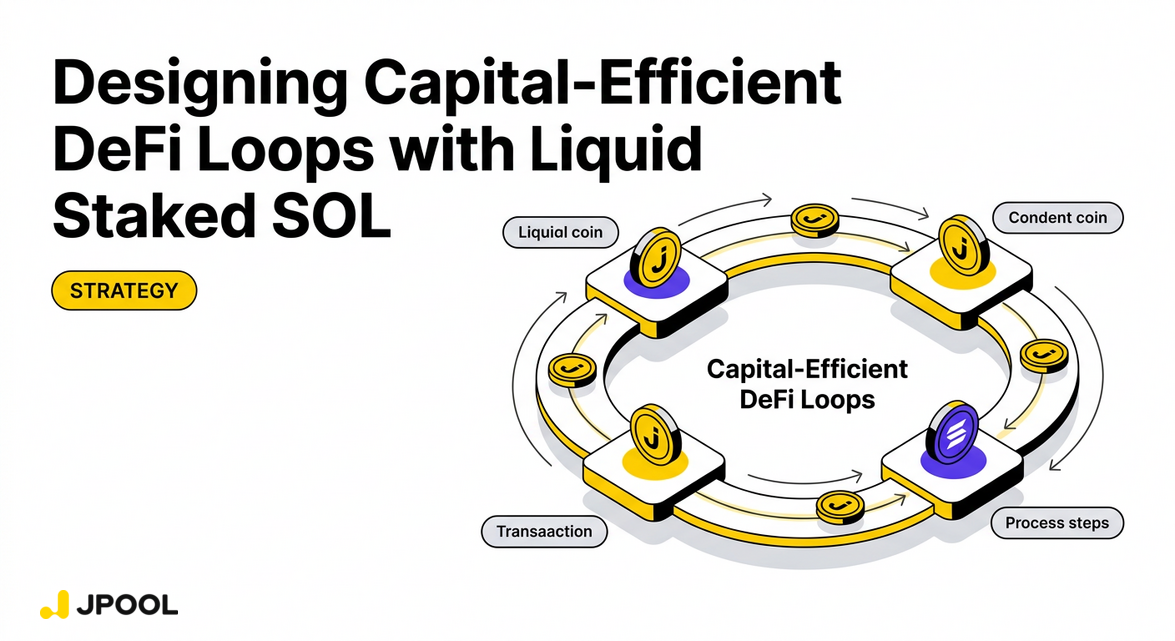
Liquid staking SOL is now a well-understood concept. What remains poorly understood is how to engineer a capital-efficient position with it — specifically, how to select a leverage multiplier that matches your risk tolerance, how to read the signals your position is sending you, and how a single leveraged JSOL position can cascade into far […]
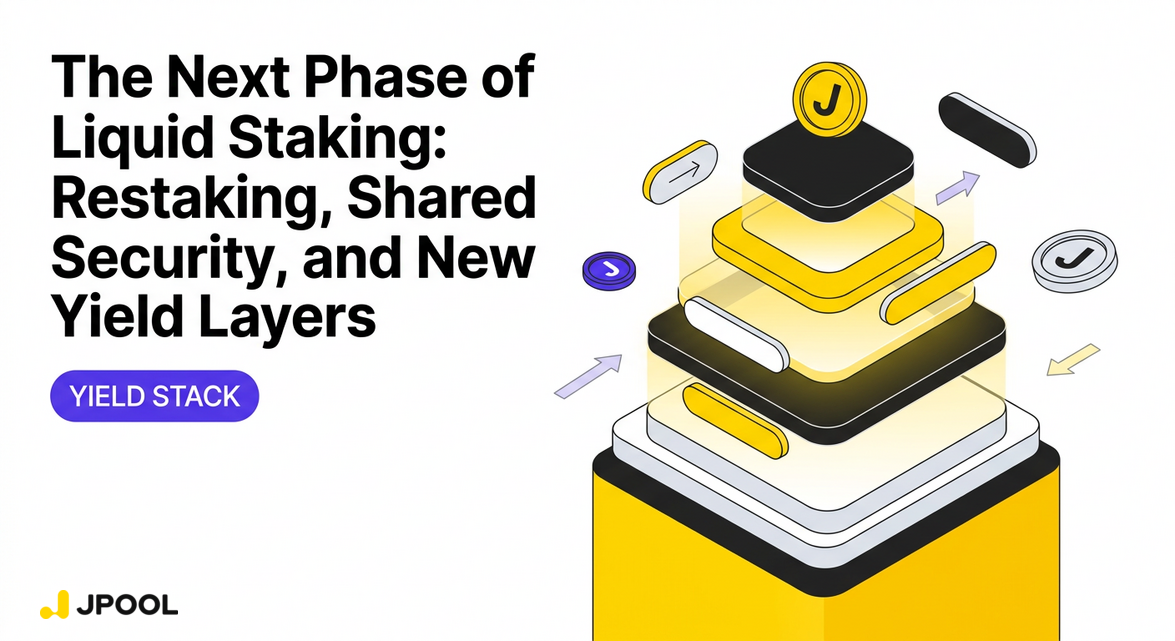
Crypto staking has matured well beyond its original premise. In its earliest form, staking meant locking tokens to earn a single stream of network rewards — a straightforward trade of liquidity for yield. That model is no longer the ceiling. Today, liquid staking tokens have become programmable financial instruments, and the most sophisticated participants in […]
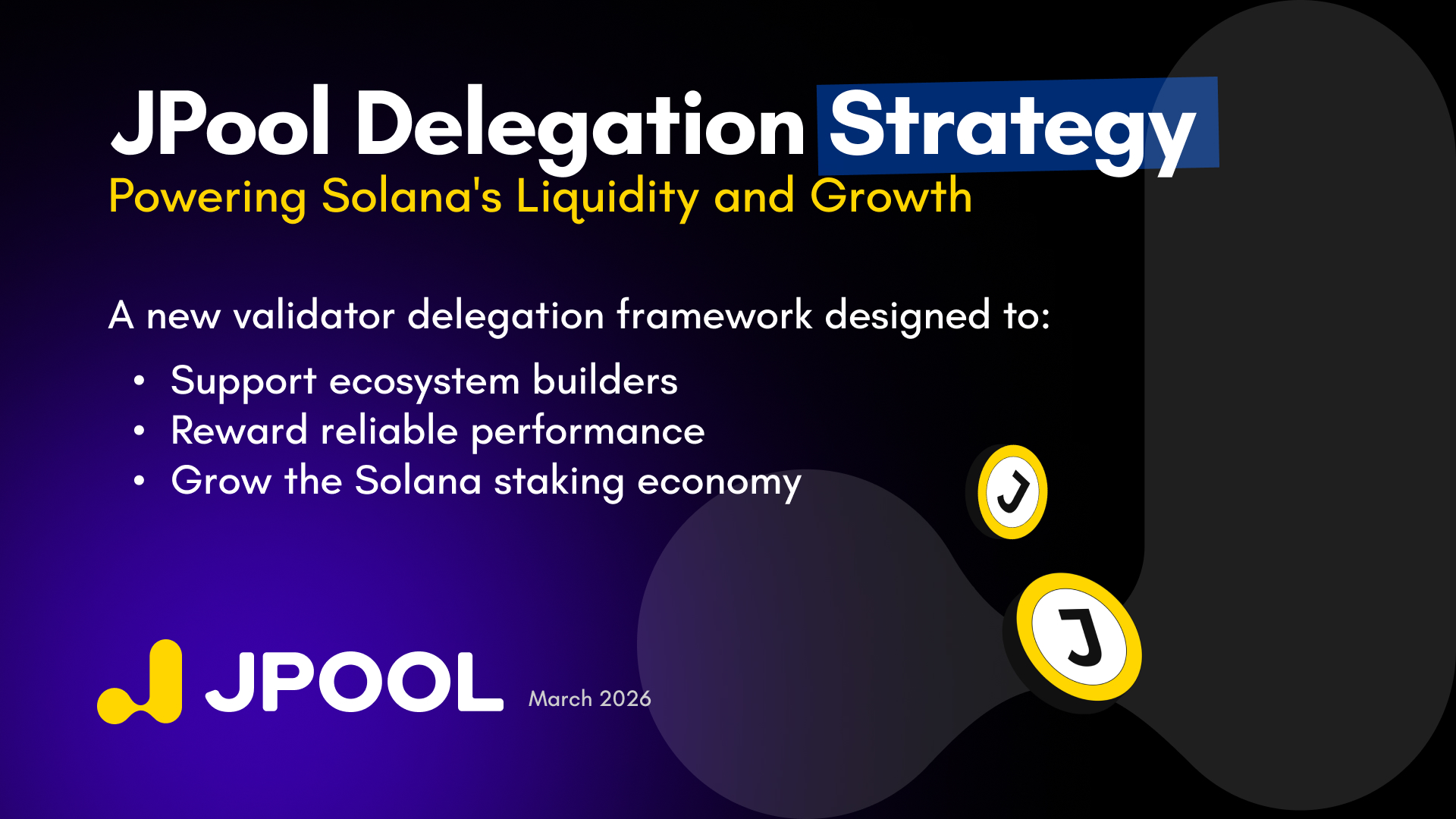
JPool Delegation Strategy Distributing Power, Driving Growth Why JPool Exists JPool prioritizes the long-term resilience and true decentralization of the Solana network by distributing more voting power to validators outside of the super-minority as well as directly incentivizing operators to attract more independent stake. While many protocols focus exclusively on maximizing APY by delegating to […]
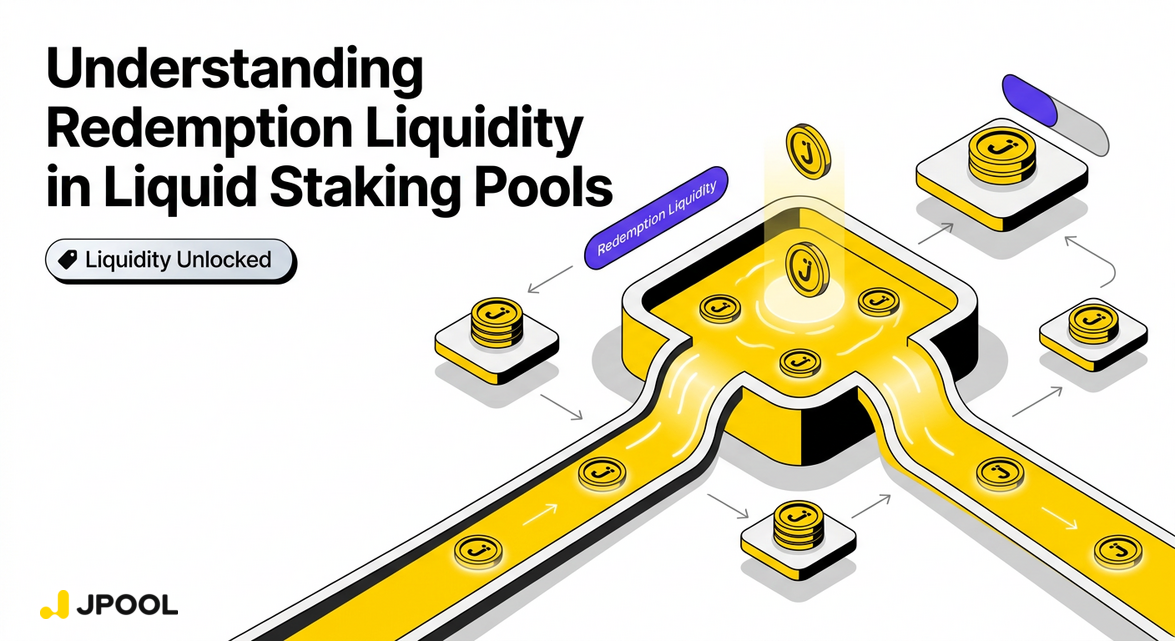
Most guides about Solana liquid staking focus on entry: how to stake, which validators are selected, and what APY to expect. Far fewer address the mechanics that matter most when you actually need your SOL back. Redemption liquidity — the ability to exit a staked position efficiently, at the right cost, and without surprises — […]
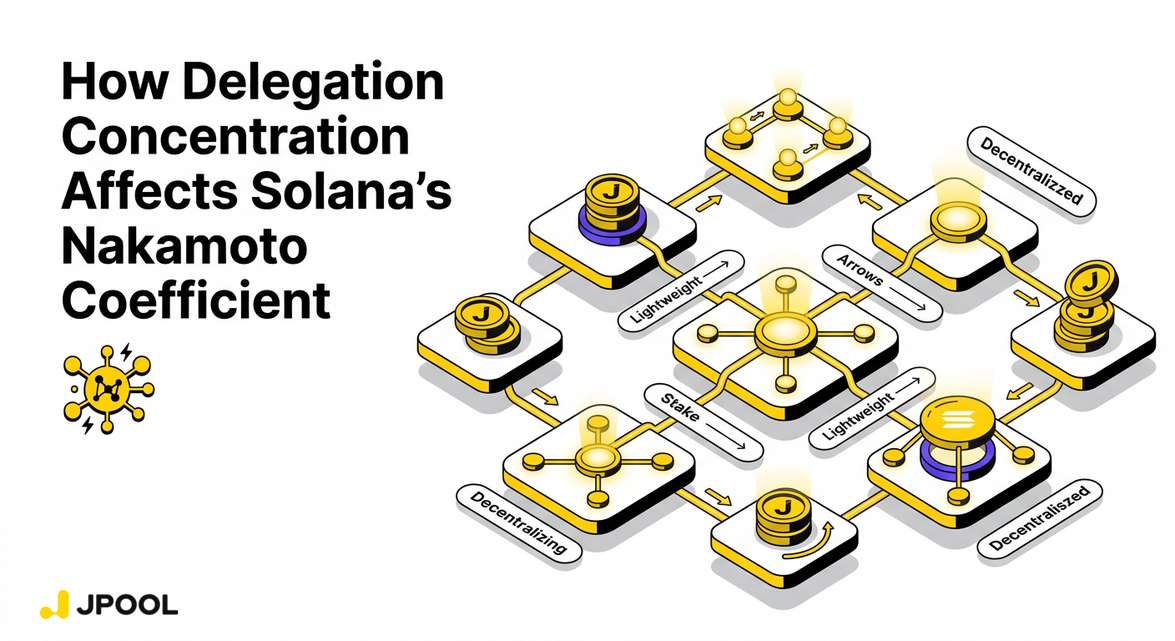
The Nakamoto Coefficient is the minimum number of independent validators that would need to collude to halt or corrupt a blockchain network. On Solana, where Proof-of-Stake means voting power is proportional to delegated stake, this number is directly shaped by how stake is distributed—not just across validators, but across the infrastructure they run on. When […]
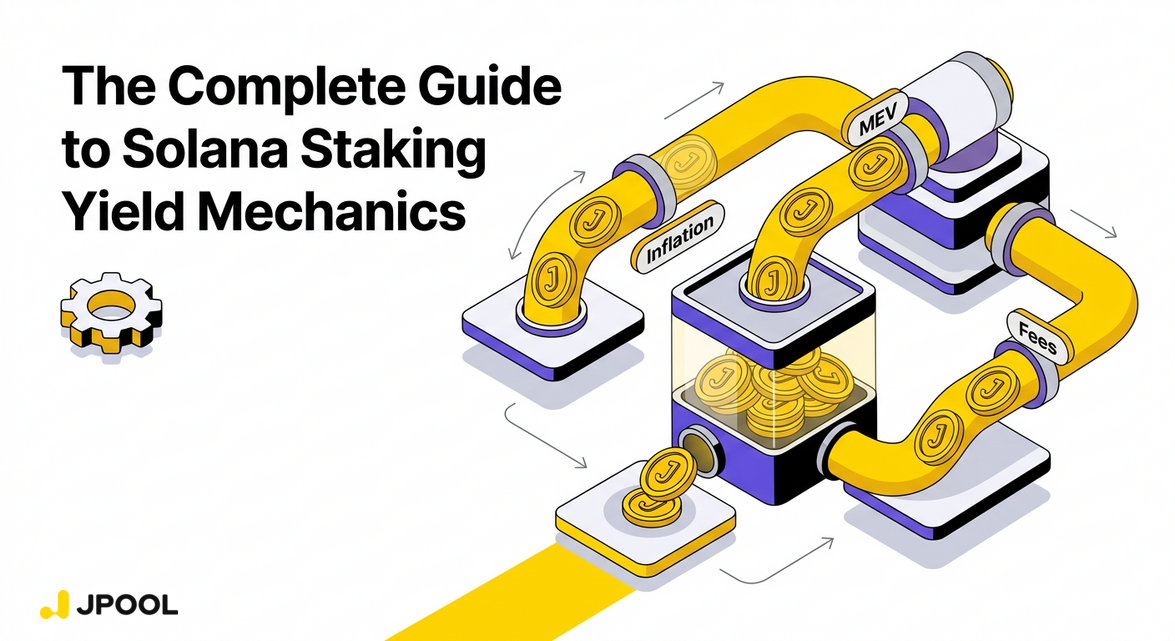
Understanding where Solana staking yield actually comes from is essential for making informed delegation decisions in 2026. Unlike traditional narratives that focus solely on inflation-based APY, the reality of Solana validator economics involves multiple revenue streams—including network transaction fees and validator performance dynamics—that directly impact your staking returns. Table of Contents Where Does Solana Staking […]
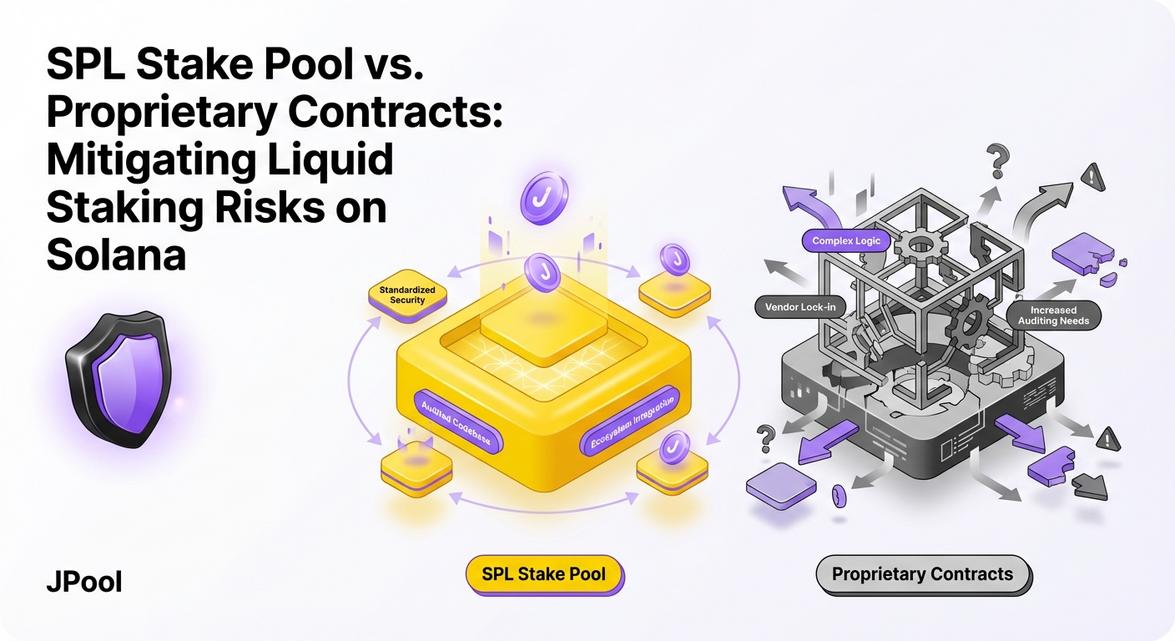
As Solana’s liquid staking ecosystem matures in 2026, institutional evaluators and retail investors alike face a critical architectural choice: platforms built on Solana Labs’ audited SPL Stake Pool Program versus those relying on proprietary smart contracts. This decision fundamentally shapes your risk exposure, capital security, and long-term confidence in liquid staking infrastructure. Table of Contents […]
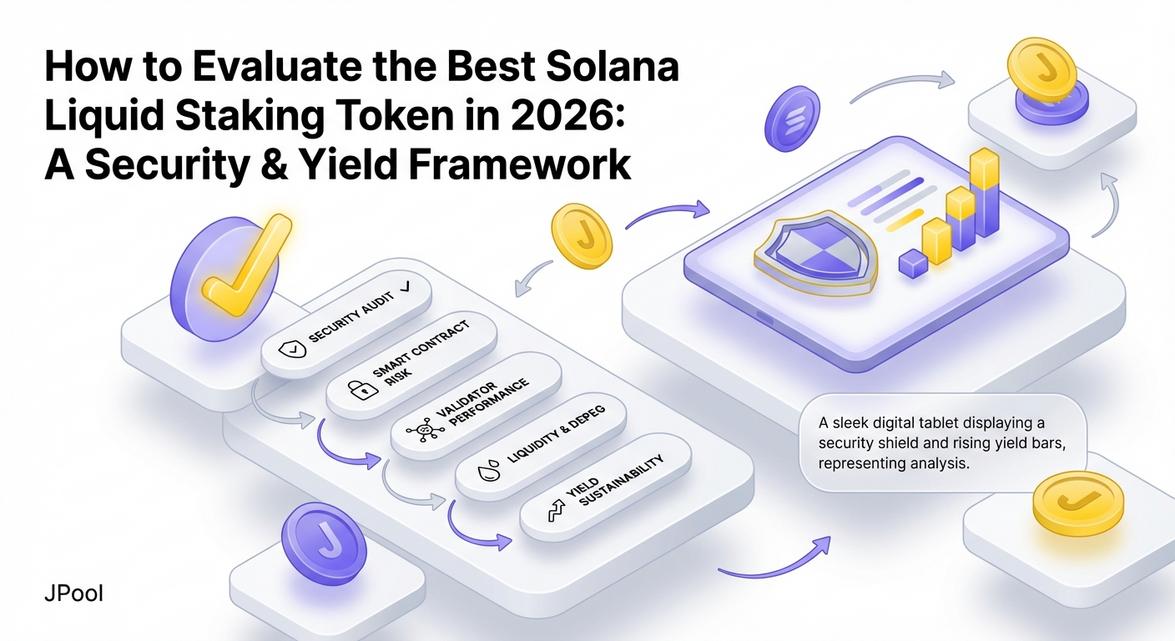
By 2026, the Solana ecosystem has evolved from a high-speed experimental network into a cornerstone of institutional finance. With this maturity comes a crowded marketplace of staking solutions. For investors holding SOL, the question is no longer if they should stake, but how to maximize capital efficiency while minimizing risk. Table of Contents 1. The […]
If you’re holding JSOL, you’re already earning staking rewards. But the moment you start using it across DeFi, you unlock something far more powerful — staking rewards + extra yield on top. That’s the core idea behind it: letting your staked SOL work in multiple places at once. This guide breaks down the main DeFi […]
Running a staking pool on Solana isn’t just about locking tokens and waiting for yield. There’s a quiet, complex process behind the scenes that keeps everything balanced. If you’ve ever wondered how your SOL gets delegated after you click “stake,” this is where Smart Delegation comes in. It’s the invisible system deciding which validators get […]
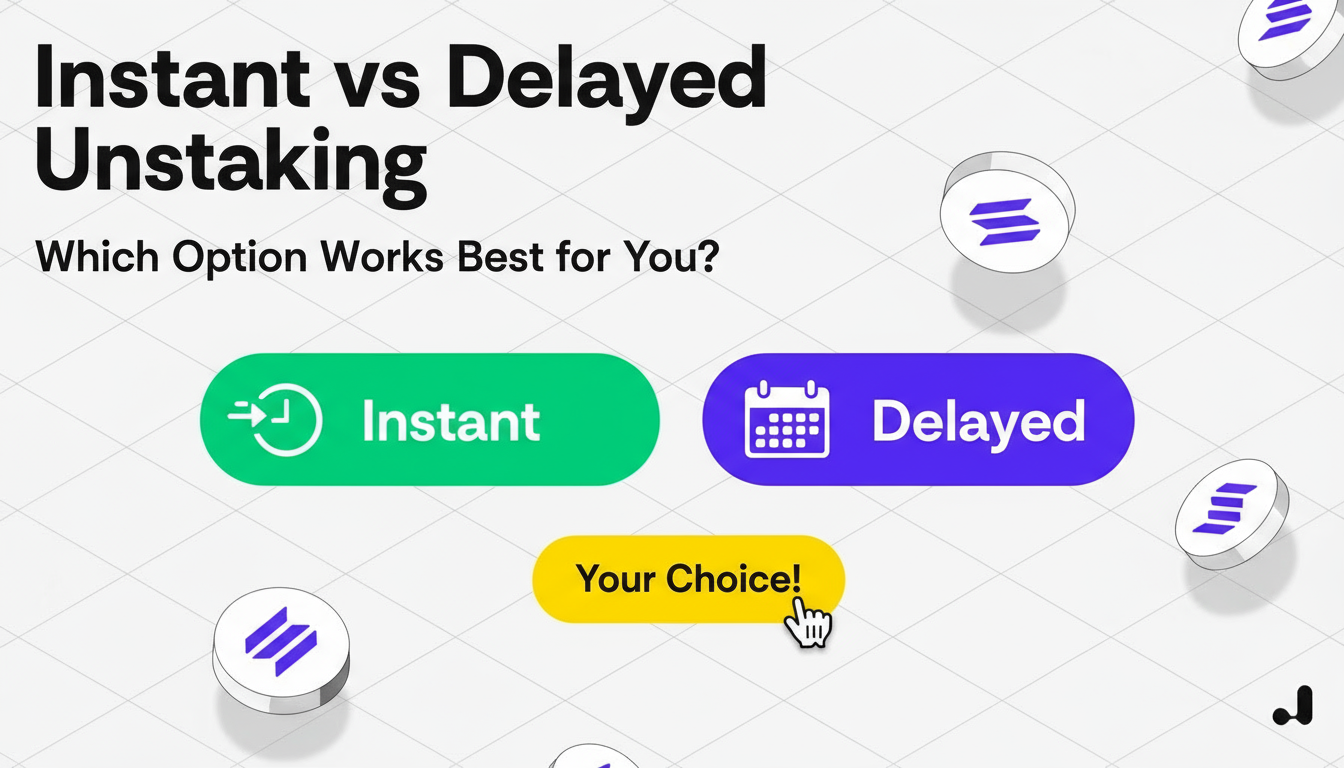
If you’ve held SOL long enough, you’ve probably gone through the moment every staker eventually faces: you need your funds back, but they’re stuck in the unstaking queue. On Solana, unstaking isn’t complicated, but the choice between instant and delayed unstaking can affect how much you keep, how fast you get it, and whether the […]

If you’ve been around the Solana validator scene long enough, you know it’s not just about spinning up a machine and waiting for rewards. There’s math involved. Not complicated math, but the kind of math that decides whether you’re running a sustainable validator or slowly paying out of pocket to “support the network.” That’s where […]
Staking SOL looks simple from the outside: delegate tokens, earn rewards, and help secure the network. But in practice, beginners repeat the same staking mistakes that reduce earnings, trap funds, or expose them to unnecessary risk. Most of these errors are avoidable once you understand how staking actually behaves on-chain, what affects rewards, and where […]
When people first think about earning on their crypto, they usually start by looking into staking strategies. On Solana, this decision comes down to two clear paths: stake natively to validators or use a liquid staking pool. Both allow you to support the network and both pay yield, but the way your capital behaves after […]
The Idea Behind the JSOL Token Staking on Solana sounds simple. You lock your SOL, validators keep the network secure, and rewards roll in. Straightforward on paper—until you try to move that staked SOL and realize it’s frozen. Before you get a chance to do that, you have to wait through an unstaking period, which […]
- «
- ‹